
The people who shape the future of technology will need more than technical ability. They will need creativity, judgment, resilience, and an understanding of how their decisions affect people and communities.
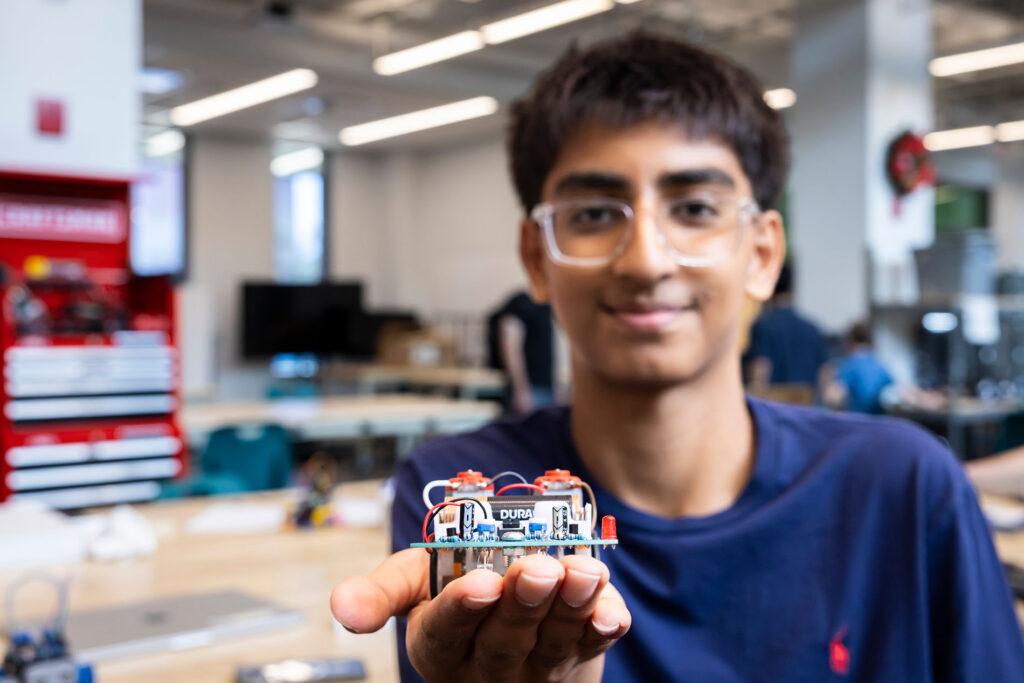
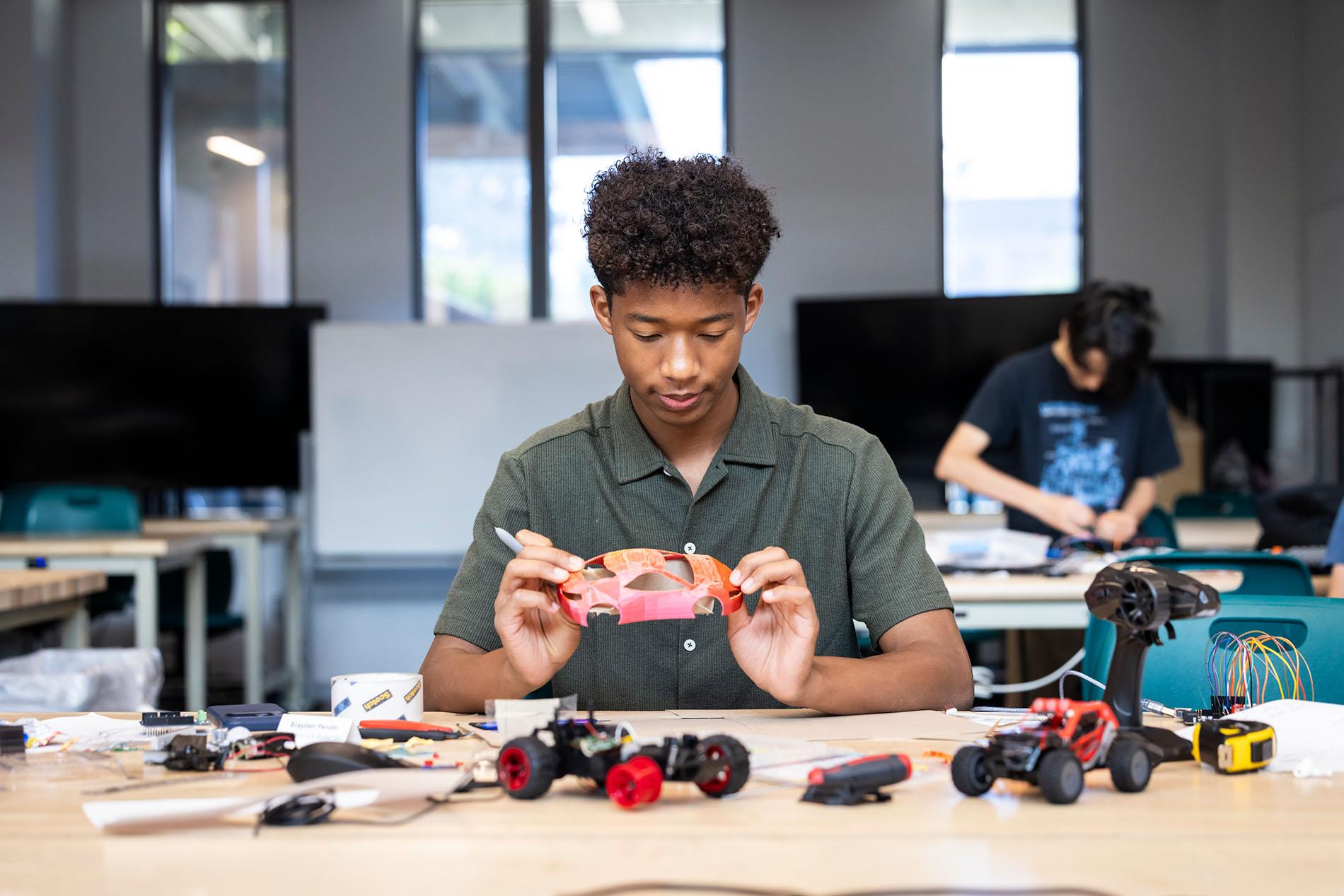
George Mason’s summer programs give high school and undergraduate students an early opportunity to develop those qualities through hands-on work. At the MIX Maker Academy, students used tools such as 3D printers, laser cutters, sewing and embroidery equipment, and digital media technology to create integrated design projects. At the Mason Autonomy and Robotics Center, interns worked alongside faculty and graduate students on research involving machine learning, information retrieval, and robot swarms.
ACCESS Academy’s AI summer camp introduced students to coding, robotics, and the real-world uses and regulation of artificial intelligence. The academy also provides a no-cost educational pathway into information technology for Virginia high school students, making future-focused learning available to students with a wide range of backgrounds and experiences.
Across these programs, students are not simply learning how to operate new tools. They are learning to ask better questions, collaborate across disciplines, test ideas, and consider how technology can be developed responsibly.
That approach reflects the purpose of Mason Now. Investment in faculty mentorship, modern learning spaces, research opportunities, and access to advanced tools can bring transformative experiences to more students. By connecting education with experimentation and public responsibility, George Mason is preparing young people not just to adapt to technological change, but to help guide it.
Evidence of impact
• Hands-on experience in robotics, AI, machine learning, engineering, fabrication, design, and digital media.
• High school and undergraduate students working alongside George Mason faculty and graduate researchers.
• Technical education paired with attention to ethics, regulation, security, and responsible use.