
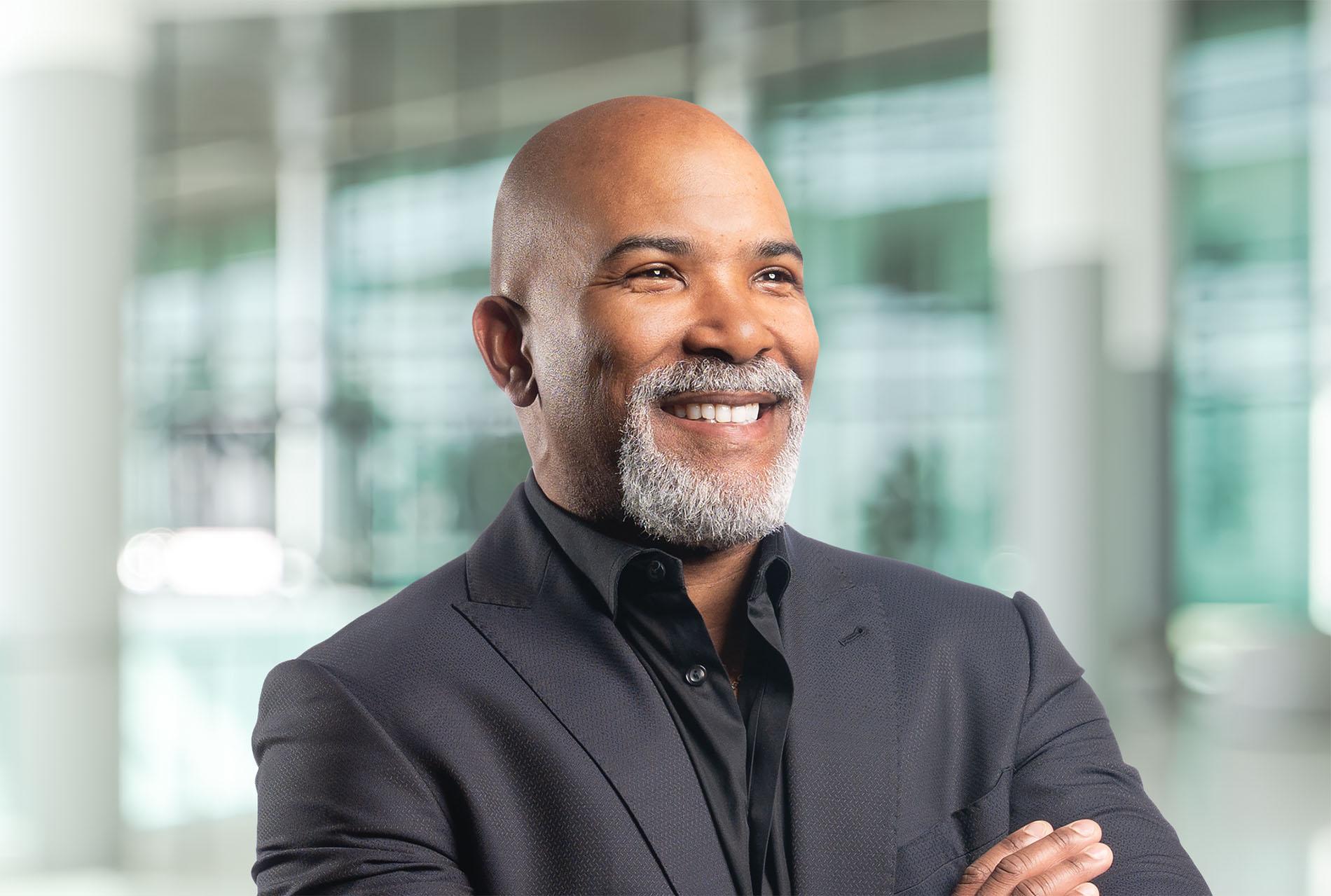
Torey Carter-Conneen, BA Economics ’06, remembers his time in George Mason’s economics program as the place where he learned to think broadly and to weigh every outcome and every risk.
Twenty years later, those lessons continue to guide his leadership as chief executive officer of the American Society of Landscape Architects (ASLA).
“George Mason challenged me to analyze data and think critically—skills that guide my decisions and leadership every day.”
“The professors I had stressed the importance of evaluating information, oftentimes with imperfect information,” he said. “In my role, you must be able to move through those conversations and lead organizations and teams to the best outcome. George Mason is completely responsible for my ability to do that.”
Before becoming CEO of ASLA, Carter-Conneen held executive leadership roles across multiple sectors, building a career at the intersection of strategy, public policy, finance, and organizational leadership. The analytical mindset he developed studying economics at George Mason continues to guide his approach by evaluating complex information, weighing competing priorities, and making decisions that create long-term value. Today, he applies those same skills to elevate the landscape architecture profession and its growing role in creating healthier, more resilient, and economically vibrant communities.
“The landscape architecture profession is responsible for designing public spaces that create healthy and sustainable environments for communities,” he said. “These spaces bring people together. And these are important elements that we oftentimes forget when we’re moving about our lives. But through landscape architecture—and I underscore this commitment through my role with ASLA—we help people understand the importance of community and particularly community being designed with intention.”
What did your George Mason experience make possible for you?
George Mason made it possible for me to lead. The education I received has shown up throughout my career from the very start. As leaders, we are often asked to make difficult decisions and to think about a host of information while considering all possible outcomes and risks. I learned how to do this throughout my education at George Mason, particularly in the economics program.
What role does economics play in sustainability?
Economics plays a significant role in sustainability. Communities that are designed to be more resilient to extreme weather, heat, and storms create more economic viability for those communities. Through our research at ASLA, we’re seeing a growing demand for amenities rooted in landscape architecture. When developers, communities, and designers incorporate features that appeal to residents and municipalities, more people choose to move into those neighborhoods. This growth attracts businesses and investment, which allows communities to thrive.
Which skills from your degree do you use every day?
Critical thinking, the ability to evaluate and take in information, and how to ask good questions. Shortly after graduation, my career began to accelerate. What I learned at George Mason, especially the challenges from my professors to analyze, interpret, and evaluate complex information, helped me advance into new opportunities.