
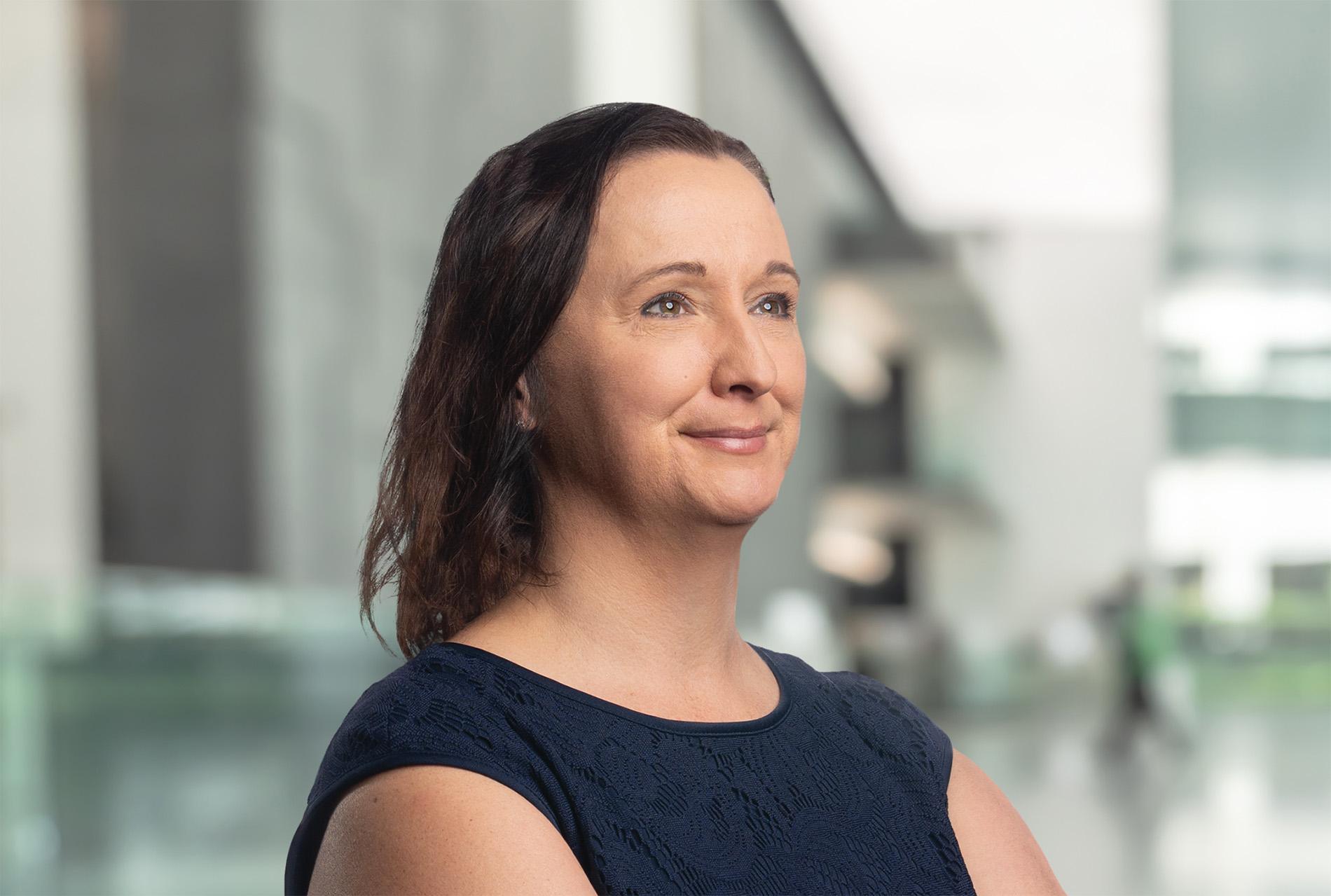
Jennifer Levasseur, PhD History ’14, often feels a bit like a detective.
Sorting through evidence, piecing together clues, and figuring out how stories fit together, she relies on the critical thinking skills she honed while at George Mason.
“At George Mason, I learned to use evidence from the past to help solve the challenges of today.”
However, Levasseur isn’t solving crimes. She’s using these skills in her career as a museum curator. Her work focuses on the technological and cultural dimensions of human space exploration, helping audiences understand not only the achievements, but also their broader significance to our society. Through exhibitions and research, she connects past innovations to present and possible future discoveries.
“I unpack historical moments and present them in ways that I hope makes them accessible and relatable to the public,” Levasseur said. “I work to find the right tools to tell our histories, through artifacts, digital experiences, images, or text.”
Why does history matter in a future-focused world?
History matters so much in our world today because studying and understanding it is the way in which, as a society, we can avoid repeating our past errors. We can look at past events, and we can hopefully learn from them. Documents show how we’ve proceeded through life and reviewing them gives us new insights into our path today. History gives us the information we need to move forward in a productive way.
What ways do you leverage your education to make a real world impact?
One of the things I use every day from my George Mason education is how to work together with other people. The cohort of historians I worked with in the classroom, as we worked towards our PhDs, we really bonded and respected each other. We supported each other, working together to solve challenges presented by professors, and we learned to look critically but helpfully at each other’s work.
How does this carry forward in your role as a museum curator?
Being a museum curator means looking at my own work with a critical eye and offering constructive feedback to others as part of a team. It is about collaborating in a community of people who are working toward the same goal. That’s something I learned at George Mason—the students and the professors all worked together to improve our research and writing—which I now do in presenting artifact stories to the public through exhibitions.
What problem are you helping to solve today?
I continue to revisit how we tell stories of our past. There is so much in my field that is recent history, and many people are alive to remember the events. I want to unpack these historical moments and present them in ways that are accessible to younger and diverse audiences, either through digital, visual, or textual experiences. I am focused on finding the right tools to help reach as many people as possible, inspiring their futures with the amazing stories of past exploration.
How did George Mason prepare you for this work?
George Mason prepared me to present the stories of the past by helping me understand how to work towards a massive goal (like a dissertation), and to consider all the perspectives that feed into a story. As a historian, when I’m analyzing documents, images, and other materials for an exhibition or online presentation, I always have my audience in mind. And my goal with my work is to create the best possible experience for the visitor or user who will interact with these important histories.